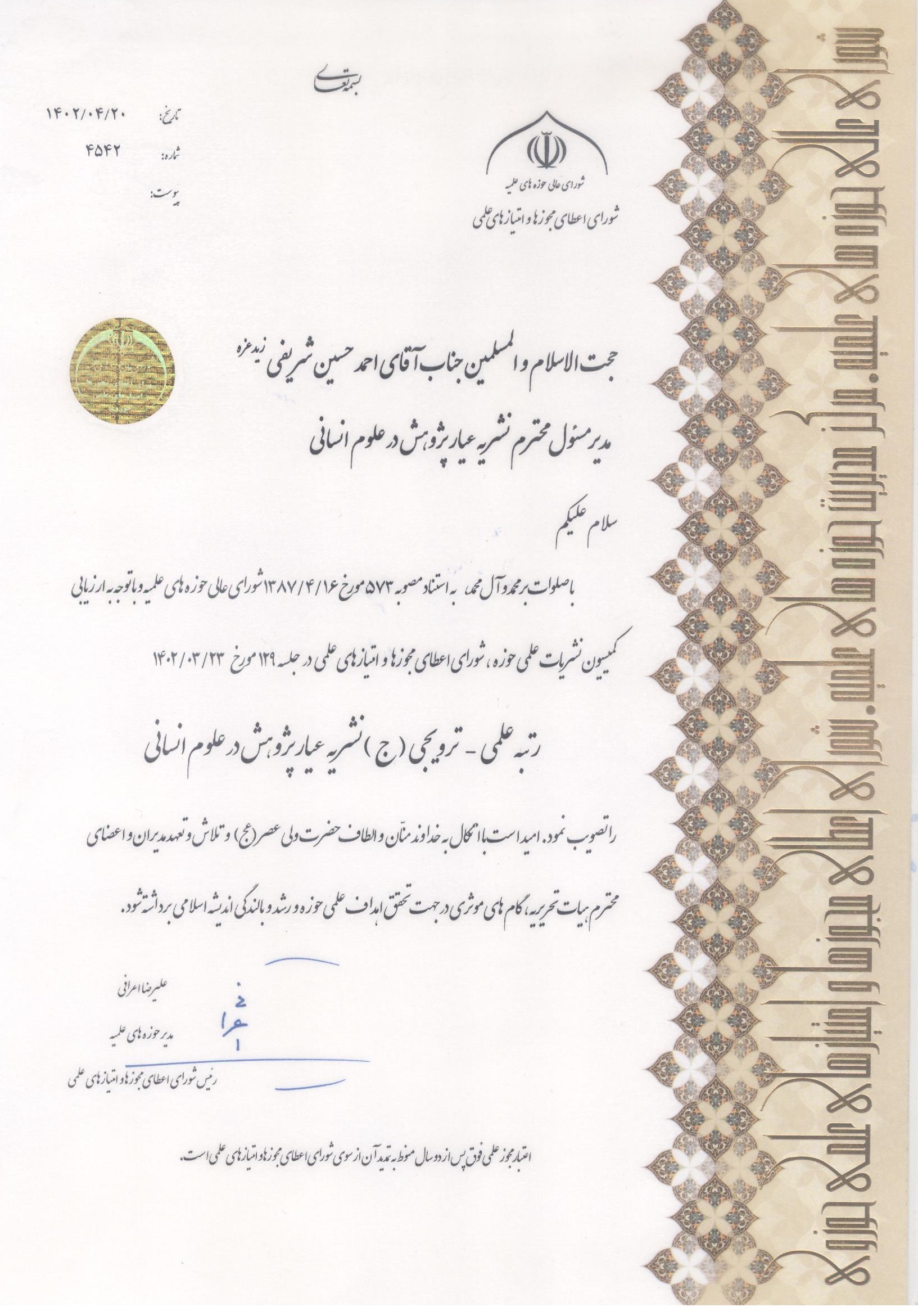
این مقاله در یکی از شماره های بعدی نشریه روش شناسی پژوهش در علوم انسانی منتشر خواهد شد.
طرح جامع پیشگیری از آسیبهای خانواده
نوع مقاله:
ترویجی
نویسندگان:

چکیده:
خانواده، هسته بنیادین جامعه و کانون اصلی تربیت نسل و انتقال ارزشها است. این مقاله با هدف" طراحی و استقرار یک سامانه جامع پیشبینی و پیشگیری از آسیبهای خانواده" با تأکید بر نقش متغیرهای کلیدی انسجام خانوادگی، انعطافپذیری، روابط اجتماعی، اقتصاد و معیشت و از طرفی با تبیین راهبردهای تحکیم نهاد خانواده(نقش متقابل و تکمیلی تعهد عاطفی و توانمندسازی معیشتی) و تبیین جایگاه زنان در اسناد بالادستی جمهوری اسلامی ایران، با روشی توصیفی-تحلیلی و با تکیه بر اسناد قانونی شامل اصول 10، 21 و 43 قانون اساسی، سند چشمانداز 1404، سیاستهای کلی برنامه هفتم توسعه، بیانیه گام دوم انقلاب و قوانین مصوب مانند: «قانون حمایت از اطفال و نوجوانان ۱۳۹۹» با بهرهگیری از ظرفیتهای علمی مراکز آموزشی و پژوهشی و حوزه¬های علمیه و مشارکت سازمانهای مردم¬نهاد (سمنها) و تبیین مدل کنسرسیومی علمی-اجرایی(حوزه علمیه، دانشگاه و سمن¬ها) میپردازد. در این مدل، مراکز آموزشی به عنوان قطب¬های پژوهش و آموزش و سازمانهای مردم¬نهاد به عنوان بازوان اجرایی و ارتباط با جامعه محلی عمل میکنند.
راهبردهای کلانی مانند «ترویج مشاوره خانواده»، «حمایت از فرزندآوری» و «مبارزه با آسیبهای اجتماعی» در برنامه هفتم توسعه مورد تأکید جدی قرار گرفتهاند.
Article data in English (انگلیسی)
Title:
Comprehensive plan to prevent family injuries
Abstract:
The family is the fundamental core of society and the main focus of raising generations and transmitting values. This article aims to "design and establish a comprehensive system for predicting and preventing family harm" and by explaining strategies for strengthening the family institution(reciprocal and complementary role of emotional commitment and livelihood empowerment) and explaining the position of women in the upstream documents of the Islamic Republic of Iran, with a descriptive-analytical method and relying on legal documents including principles 10, 21 and 43 of the Constitution, the 1404 Vision Document, the general policies of the Seventh Development Plan, the Second Step Declaration of the Revolution and approved laws such as the "Law on the Protection of Children and Adolescents 1399" by utilizing the scientific capacities of educational and research centers and seminaries and the participation of non-governmental organizations (Semans) and explains a scientific-executive consortium model (Semans, universities and Semans). In this model, educational centers act as research and education hubs, and non-governmental organizations act as executive arms and communication with the local community.
Major strategies such as "promoting family counseling", "supporting childbearing" and "combating social harm" have been seriously emphasized in the Seventh Development Plan.
شیوه ارجاع به این مقاله:
RIS
Mendeley
BibTeX
APA
MLA
HARVARD
VANCOUVER
عین الکمالی، رمضانعلی. (1405) طرح جامع پیشگیری از آسیبهای خانواده. دو فصلنامه روش شناسی پژوهش در علوم انسانی، ()، -
رمضانعلی عین الکمالی."طرح جامع پیشگیری از آسیبهای خانواده". دو فصلنامه روش شناسی پژوهش در علوم انسانی، ، ، 1405، -
عین الکمالی، رمضانعلی.(1405) 'طرح جامع پیشگیری از آسیبهای خانواده'، دو فصلنامه روش شناسی پژوهش در علوم انسانی، (), pp. -